





OEM Battery, Alternator, and Charging System Care for West Bend, WI Drivers
Russ Darrow Chrysler Dodge Jeep RAM of West Bend – OEM Battery, Alternator, and Charging System Care for West Bend, WI Drivers
Your vehicle’s electrical system is the quiet backbone of daily driving around West Bend—starting strong on cold mornings, powering headlights on County Road NN at dusk, and keeping cabin tech humming on the way to Kettle Moraine. If the battery, alternator, or charging cables fall out of spec, you can experience slow cranks, sporadic warning lights, dim headlights, or random system resets. This guide explains how to spot issues early, the difference OEM parts make, and how to build a practical plan for testing and replacement that suits West Bend driving patterns.
Why batteries struggle in everyday West Bend driving
Short errand trips on Hwy 33 or stop-and-go around downtown can undercharge a battery because the alternator doesn’t get enough continuous time at speed to replenish what starting consumes. Combine that with subfreezing mornings and summer heat waves, and even a healthy battery can lose reserve capacity faster than expected. That’s why periodic testing—rather than waiting for a no-start—is the most reliable approach. A 3-minute test during an oil change can flag low state of health long before you’re stuck after a game at the Slinger Speedway near Slinger, WI.
Alternators and serpentine belts matter just as much. If the belt slips or the alternator undercharges, you’ll see symptoms that look like a weak battery, yet replacing the battery alone won’t solve the root cause. A quick visual belt check and charging-voltage test during routine service can save you from repeat failures and unnecessary expense.
OEM vs aftermarket for batteries and connections
Original equipment batteries, hold-downs, and terminal hardware are designed to match your vehicle’s cold-cranking requirements, venting path, sensor interfaces, and tray footprint. On modern CDJR vehicles, that exact fit also protects sensitive modules from voltage dips and charging irregularities. The same principle applies to alternators and battery cables—OEM parts integrate with your power management strategy, idle-stop systems, and diagnostic thresholds so you get predictable starting, consistent voltage, and fewer nuisance warnings.
- Correct specification: OEM batteries are built to the exact cold cranking amps and reserve capacity your vehicle expects.
- Proper fit: Factory trays, hold-downs, and vents secure the battery and route gases correctly.
- Electrical integrity: OEM alternators and cables maintain target voltage and communication with control modules.
- Long-term reliability: A matched system reduces stress on starters, ignition coils, and control units.
Put simply, when the components fit right, charge right, and communicate right, you get easier starts, cleaner diagnostics, and less downtime.
Simple checks you can do between services
While professional load testing tells the full story, there are quick at-home checks that improve confidence and catch problems early.
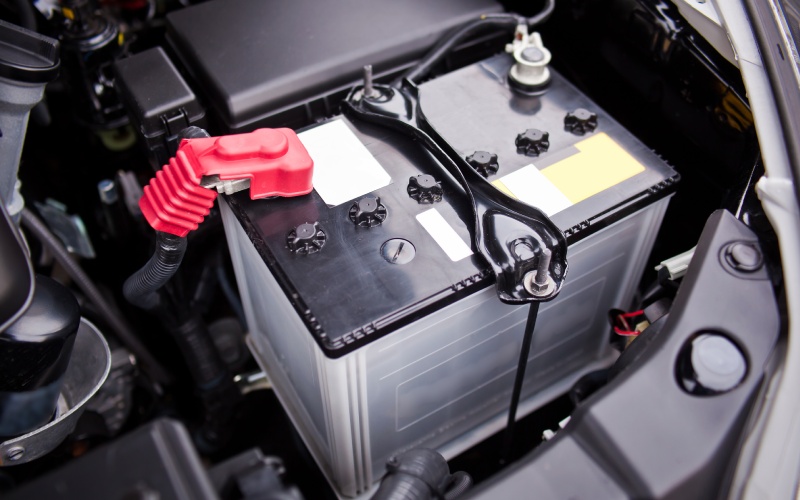
- Look for corrosion on terminals—white or green residue signals resistance that can lower starting voltage.
- Confirm terminals are tight; a loose clamp can mimic a dying battery.
- Note crank speed and dashboard brightness at start—slower cranks or dimming lights can mean declining capacity.
- Watch for intermittent warnings—airbag, ABS, or traction lights that flicker after startup often point to voltage drop.
- Listen for belt squeal—especially in wet conditions—indicates slip that can reduce alternator output.
If anything seems off, ask for a battery and charging-system check the next time you’re in for an oil change or tire rotation. It’s quick, inexpensive insurance against surprise no-starts.
How we test and service your charging system
During service, we begin with a state-of-health and state-of-charge battery test, then check alternator output under load with lights, HVAC, and rear defroster activated. We inspect cables, grounds, and the serpentine belt, and we scan for stored low-voltage codes that might not trigger a warning lamp. On vehicles equipped with intelligent battery sensors or idle-stop systems, we follow factory procedures to register a new battery so charging logic stays accurate. That process is essential for long battery life and prevents hard-to-diagnose warning lights after replacement.
For alternator concerns, we evaluate ripple voltage to catch failing diodes, confirm proper belt tension and alignment, and check that grounds are clean and secure. Small issues—like a corroded ground strap—can create big symptoms that look like a failing module. Addressing fundamentals first saves time and money.
Planning ahead helps West Bend families and workers avoid disruptions. If your battery is older, your alternator is original with high mileage, or you’ve noticed slower cold cranks, schedule a quick test. It fits easily into routine maintenance and gives you a clear timeline for replacement before peak weather hits.
For many drivers, a Mopar Express Lane visit is the easiest way to stay proactive. A battery test pairs naturally with an oil change, tire rotation, wiper replacement, and a multipoint inspection. That single stop covers most everyday needs and flags any electrical concerns that warrant a closer look.
When replacement is due, our team installs OEM batteries and alternators that meet factory specs and integrates them correctly with your vehicle’s charging logic. We also replace terminal hardware, apply protective coatings against corrosion, and verify voltage with a post-installation load test. That means you leave with a documented baseline and the confidence that your next start will be strong—at home, in the office lot, or curbside on Main Street.
Frequently Asked Questions:
How often should I test my battery?
We recommend a quick test at every oil change, or at least twice a year if you drive many short trips or park outside.
What are signs my alternator is failing?
Frequent jump-starts, dimming lights at idle, electrical glitches, or a battery light that flickers can indicate alternator or belt issues.
Do modern vehicles need battery “registration” after replacement?
Many do. Registering the battery keeps charging targets accurate and prevents voltage-related warning lights or premature wear.
Are OEM batteries worth it?
Yes. Correct specs, fit, and communication with power management systems protect starters, modules, and sensors, improving reliability.
Can you test and replace during one visit?
In most cases, yes. We can test, review results with you, and complete same-day OEM replacement along with post-install checks.
Whether you’re managing a daily commute across West Bend or planning weekend trips up US-45, a healthy electrical system keeps the drive stress-free. For expert testing, OEM-grade replacements, and proper integration with your vehicle’s charging logic, schedule service with the team at Russ Darrow Chrysler Dodge Jeep RAM of West Bend. If you’re traveling from communities near Slinger, WI, our West Bend location makes it simple to add a battery test to your next oil change and head back on the road with confidence.
0 comment(s) so far on OEM Battery, Alternator, and Charging System Care for West Bend, WI Drivers