





Which SUV has better winter traction for families around Pewaukee, WI: 2026 Jeep Compass or 2026 Hyundai Tucson?
Russ Darrow Jeep of West Bend – Which SUV has better winter traction for families around Pewaukee, WI: 2026 Jeep Compass or 2026 Hyundai Tucson?
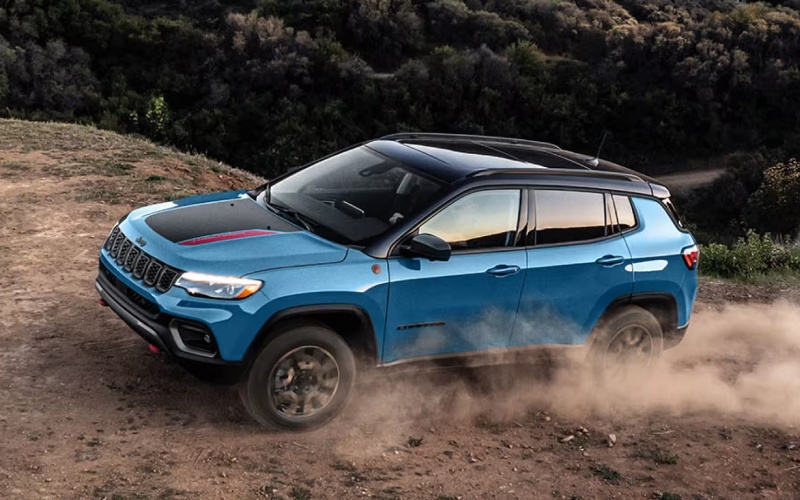
When local families compare two popular compact SUVs for winter confidence, one question rises to the top: which delivers more secure traction and control when snow and slush arrive around Pewaukee, WI? That often leads to a head-to-head between Jeep’s compact SUV—renowned for its trail-ready DNA—and Hyundai’s polished, family-friendly crossover. While both are capable daily drivers, their hardware and tuning point in different directions once the weather turns. One emphasizes standard all-wheel drive and trail-proven traction management, including a low-speed crawl capability and a dedicated Rock setting on its off-road-focused trim. The other prioritizes a serene ride, roomy interior space, and terrain modes tailored primarily to lighter off-pavement needs like Mud, Snow, and Sand. Understanding how these systems behave on slick side streets, crowned county roads, and unplowed driveways can help families choose with confidence.
Standard all-wheel drive across the lineup means Jeep routes power to all four wheels on every model, helping manage wheel slip before it becomes a problem. Hyundai’s optional all-wheel drive is competent and steady, but buyers need to select it. Where the climate frequently throws freezing rain followed by snow, having AWD as a given—without special ordering—simplifies the decision and helps ensure every model on the lot carries the same core capability. Beyond that, Jeep’s available Selec-Terrain system adds modes for Snow, Sand/Mud, and Rock, enabling finer control of torque split and throttle sensitivity. Hyundai’s Terrain Mode selection brings useful adjustments for Mud, Snow, and Sand on the XRT, which is a welcome addition for occasional trail parking areas or sloppy shoulders, but it does not include a Rock mode or the same low-speed crawl calibration designed for uneven, loose surfaces.
- Standard all-wheel drive: Jeep equips every trim with AWD, so winter traction isn’t a step-up option.
- Traction modes tuned for snow and ice: Snow programming refines throttle and torque to keep wheels from spinning up quickly.
- Low-speed control on grades: A crawler-style ratio helps you modulate speed over ruts or icy inclines without constant braking.
- Hardware that supports real-world use: Factory tow hooks and available skid plates add peace of mind when shoulders get mushy.
Of course, traction is only one part of winter driving. Visibility and control matter, too. Both SUVs offer heated front seats and heated steering wheels to keep drivers relaxed, which helps maintain smooth inputs—critical on slick pavement. Helpful tech—like a Surround View Camera—adds confidence when parking next to high snowbanks, and automatic high-beam headlamps can assist when rural routes turn dark early. The Hyundai’s calm and quiet demeanor reduces fatigue on longer winter drives, while the Jeep’s steering and throttle mapping pair well with the traction-first approach to staying in command when grip changes corner to corner.
We also hear layered questions from families planning winter road trips. Will the AWD system be proactive at speed or reactive only after a slip occurs? Does the traction program cut power abruptly, or does it allow a measured application so you can maintain momentum on an icy hill? How do the systems behave when you need to pull away from a stop sign halfway up a grade? In our experience, the Jeep’s standard AWD and traction programs feel particularly well-matched to these moments, with thoughtful tuning that minimizes drama when you need steady forward bite. Hyundai’s system remains predictable and easygoing, but the Jeep’s trail-informed calibration shines when the weather throws its worst.
For families who want a daily driver that’s also ready for unplowed cabins, state park trailheads, and after-storm errands, the Jeep’s combination of standard AWD and available trail hardware strikes a persuasive balance. If your winter driving leans toward cleared suburban routes with occasional slush and the appeal of a spacious, modern interior, Hyundai remains an appealing pick. The right choice ultimately comes down to your routes, your parking situations, and how often you encounter changing traction underfoot.
At Russ Darrow Chrysler Dodge Jeep RAM of West Bend, our product specialists, serving Green Bay, Sheboygan, and Pewaukee, can walk you through these systems—how they engage, what you’ll feel through the wheel, and which features best match your winter routine. We’ll help you build the right combination of equipment and demonstrate the real-world differences on a test drive so you can drive into winter with confidence.
Frequently Asked Questions:
Do I need special winter tires if I choose an SUV with AWD?
AWD maximizes available traction, but dedicated winter tires further improve cold-weather grip and braking. If you regularly drive in heavy snow or on untreated roads, winter-rated tires are a smart safety addition.
What’s the benefit of a dedicated Rock mode if I don’t plan to go off-roading?
Rock mode refines throttle and torque delivery for precise low-speed control, which can help in deep ruts, icy driveway approaches, or uneven, snow-packed surfaces—situations that aren’t limited to trails.
Is a Surround View Camera useful in winter?
Yes. It helps you see over snowbanks when backing out of tight spots and reduces the guesswork near high piles, curbs, or icy berms that can hide obstacles.
0 comment(s) so far on Which SUV has better winter traction for families around Pewaukee, WI: 2026 Jeep Compass or 2026 Hyundai Tucson?