





Why Uneven Tire Wear Happens and When to Schedule Alignment Service in Hartford, WI
Russ Darrow Chrysler Dodge Jeep RAM of West Bend – Why Uneven Tire Wear Happens and When to Schedule Alignment Service in Hartford, WI
Tire wear tells a story. For Hartford drivers who split time between neighborhood streets, Highway 60, local job sites, school drop-offs, and longer drives toward West Bend or Milwaukee, uneven tread wear can be one of the first signs that a vehicle needs attention. Many people search for tire rotation or alignment service only after noticing a vibration, a pull in the steering wheel, or tires wearing faster on one edge. The good news is that those symptoms often start with maintenance items that can be inspected before tire life is shortened. At Russ Darrow Chrysler Dodge Jeep RAM of West Bend, our service department helps drivers understand what the wear pattern means, whether a rotation is enough, and when an alignment or deeper suspension inspection may be appropriate.
What Uneven Tire Wear Usually Means
Uneven tire wear can come from several sources, and the pattern matters. Wear on both outer shoulders can point to underinflation or repeated heavy cornering. Wear down the center may suggest overinflation. Feathering, cupping, or one-side wear can signal alignment angles, worn suspension parts, wheel balance concerns, or tire rotation intervals that have stretched too long. On Ram trucks that tow, Jeep SUVs used on gravel roads or trails, and Chrysler or Dodge vehicles used for busy commuting, tire demands change based on load, speed, road texture, and driving style. A visual inspection helps identify the likely cause, while a technician can measure tread depth and check for pressure, balance, or steering component concerns.
Hartford-area roads can include smooth highway stretches, patched pavement, rural routes, and parking lots with tight turns. Each setting affects tire wear differently. A vehicle that feels normal from the driver’s seat can still have alignment angles slightly outside the ideal range. Over time, that small difference can scrub tread away and reduce tire life. If you recently hit a pothole, brushed a curb, replaced suspension components, installed new tires, or noticed the steering wheel is off-center, scheduling an alignment inspection is a smart step. Drivers near Cedarburg, WI often ask whether a tire rotation can solve the problem. Rotation helps even out normal wear, but alignment service addresses the wheel angles that can cause abnormal wear to continue.
Rotation, Balance, and Alignment Are Different Services
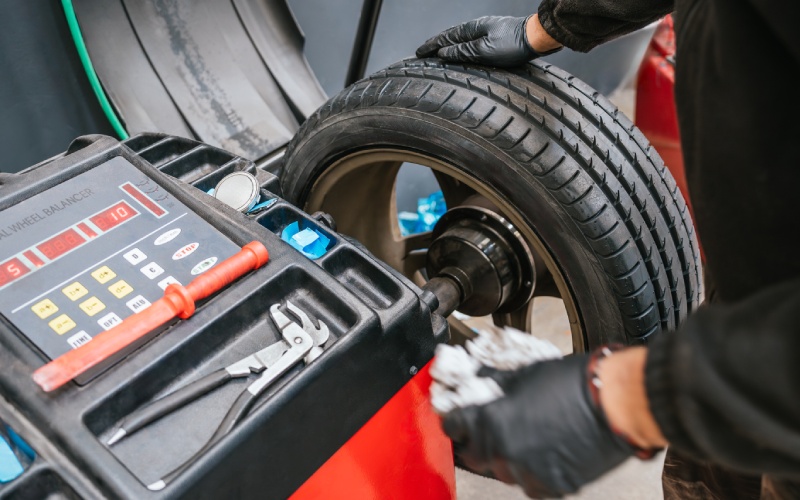
It is easy to group tire services together, but each one solves a different issue. Tire rotation changes tire positions to promote even wear. Wheel balancing corrects weight distribution around the wheel and tire assembly to reduce vibration. Alignment adjusts suspension geometry so tires meet the road at the correct angle. A vehicle may need one, two, or all three services depending on symptoms and inspection results. During a service visit, our technicians can check tire pressure, tread depth, sidewall condition, wear pattern, and brake condition, then recommend the next step based on what is found.
- Schedule a rotation: If tread wear is generally even but front and rear tires show different rates of wear.
- Ask about balancing: If you feel vibration through the steering wheel, seat, or floor at certain speeds.
- Request alignment evaluation: If the vehicle pulls, the steering wheel sits off-center, or one edge of the tire wears quickly.
- Inspect suspension parts: If tires show cupping, bouncing, clunking, or repeated abnormal wear after prior service.
Choosing the right service protects more than tread depth. Tires influence braking, steering response, ride comfort, traction, and fuel efficiency. A Jeep Grand Cherokee with unevenly worn tires may feel less settled during lane changes. A Ram 1500 with poor alignment may work harder while towing or hauling. A Chrysler Pacifica carrying family passengers benefits from even tire contact and predictable braking. Tire care also supports driver confidence because your tires are the only part of the vehicle designed to maintain constant road contact. When wear is corrected early, you can often avoid replacing tires before the expected service life.
Why OEM Knowledge Helps With Tire Service
Factory-informed tire service is especially helpful for Chrysler, Dodge, Jeep, and Ram vehicles because tire size, load rating, pressure settings, wheel design, and alignment specifications can vary by trim, drivetrain, and equipment. Our service center works with genuine Mopar parts and accessories, while also offering access to tire brands such as Goodyear and Michelin. If your vehicle needs replacement tires, our team can help match tire size and rating to the model’s requirements. If your vehicle is used for towing, commuting, family travel, or light off-road use, tire selection and maintenance planning should reflect that use.
Drivers near Cedarburg, WI also benefit from combining tire service with other routine maintenance. For example, an oil change visit can include tire pressure checks, tread inspection, a tire rotation with brake inspection, battery testing, fluid level checks, wiper blade replacement guidance, and a multipoint inspection. This approach helps uncover issues in one visit instead of waiting for a separate symptom to appear. It also creates a cleaner maintenance record, which is helpful if you want to track tire life, plan for future replacement, or confirm that a pull or vibration has been resolved after service.
Frequently Asked Questions:
How do I know if my vehicle needs an alignment?
Common signs include pulling to one side, an off-center steering wheel, rapid edge wear, or steering that feels less stable than usual. An alignment inspection can confirm whether wheel angles are outside specification.
Can I rotate tires without getting an alignment?
Yes, if wear is normal and the vehicle tracks straight. However, if tires show one-sided wear, feathering, or repeated abnormal wear, rotation alone will not correct the cause.
Should I replace tires before or after an alignment?
If worn tires need replacement, alignment is often recommended at the same visit or shortly after installation. This helps protect the new tire set from the same wear pattern that affected the previous tires.
If you notice uneven tire wear, steering pull, vibration, or faster-than-expected tread loss around Hartford, schedule a tire inspection with our West Bend service team. Our certified technicians can evaluate tire condition, rotation needs, balance concerns, alignment angles, brakes, and suspension components so you can make an informed decision. Use our online service scheduler or contact our service department to plan a visit that fits your week.
0 comment(s) so far on Why Uneven Tire Wear Happens and When to Schedule Alignment Service in Hartford, WI